Constraints
We explore how constraints work in Geometry Expressions.
We explore how constraints work in Geometry Expressions.
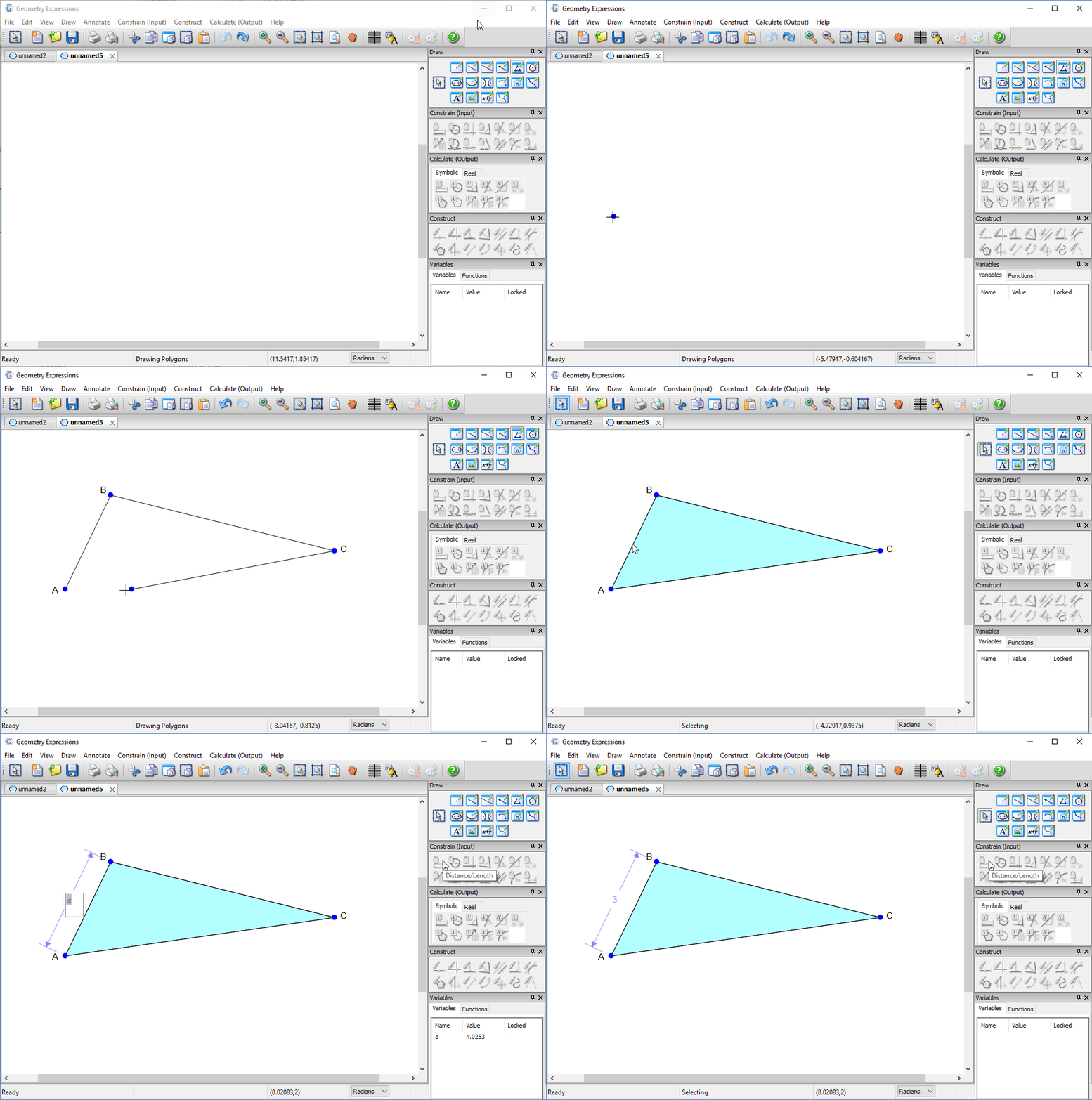
To create specific geometry, first create a sketch, without worrying about details. Here we draw a triangle.
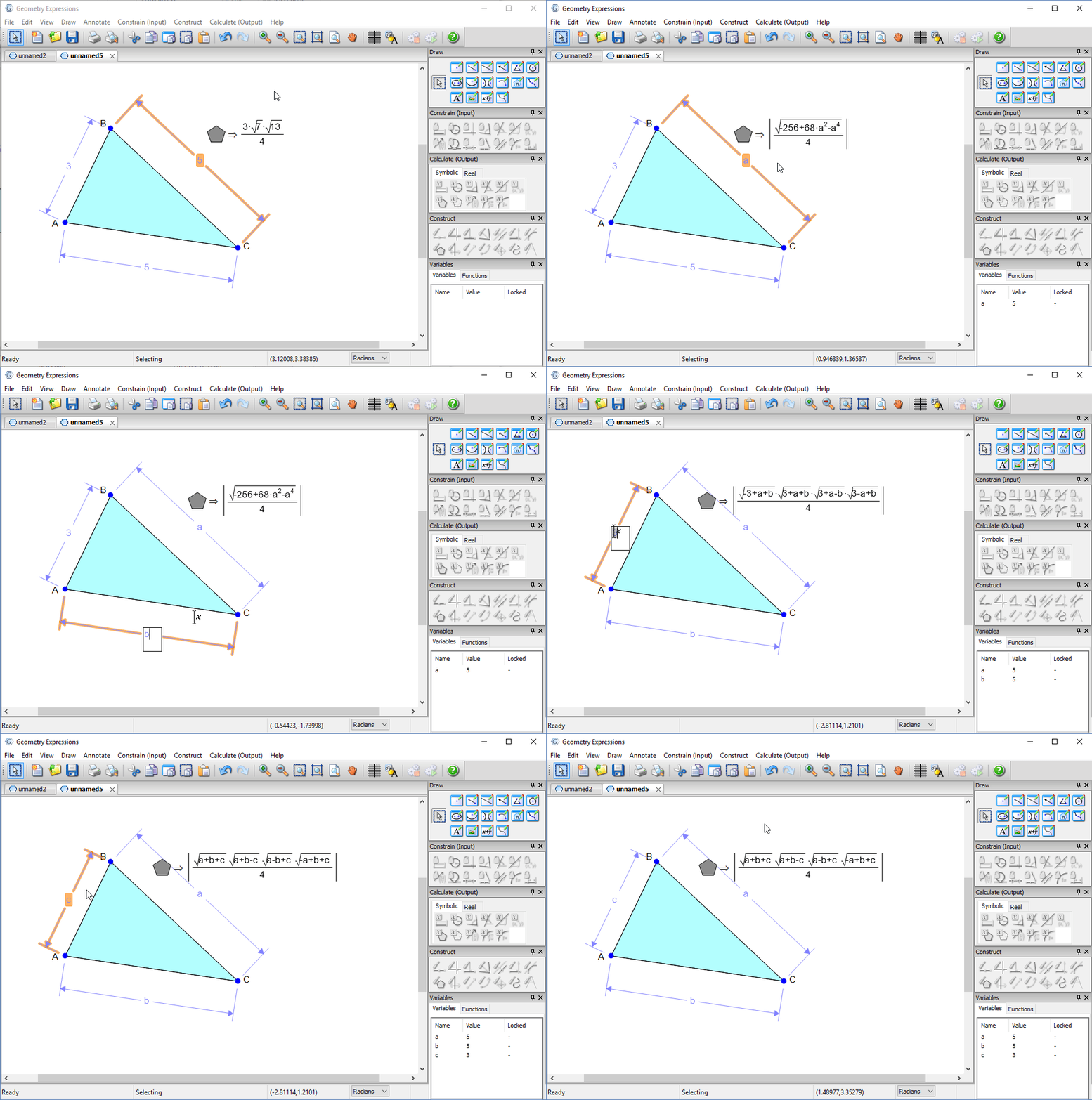
Now we add precise details by constraining the lengths of the sides.
Notice the first length does not change the drawing, it simply sets the scale.
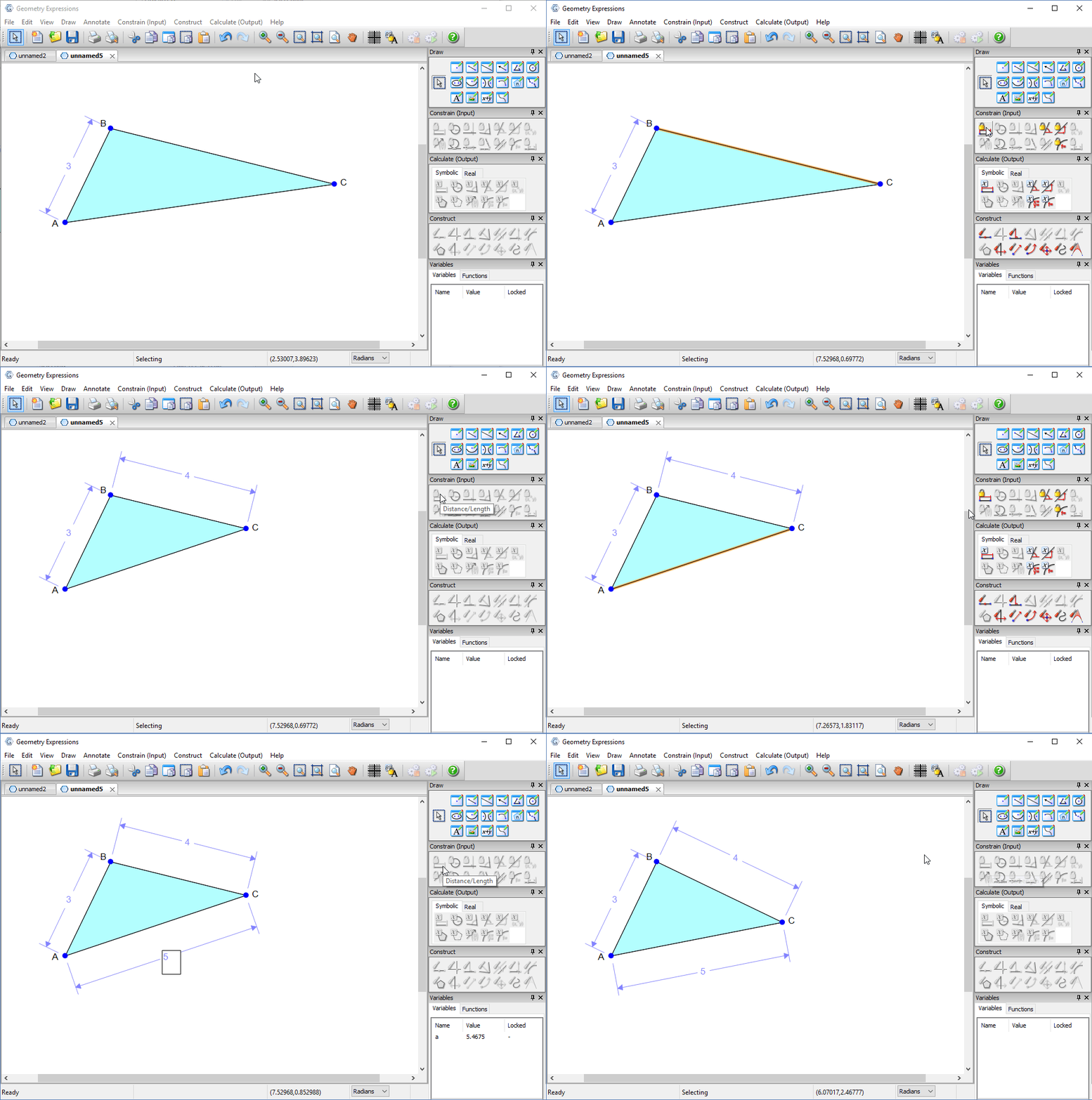
When you set the length of the second and third side, the drawing does change.
You can change the lengths and the drawing will change (including the measured area).
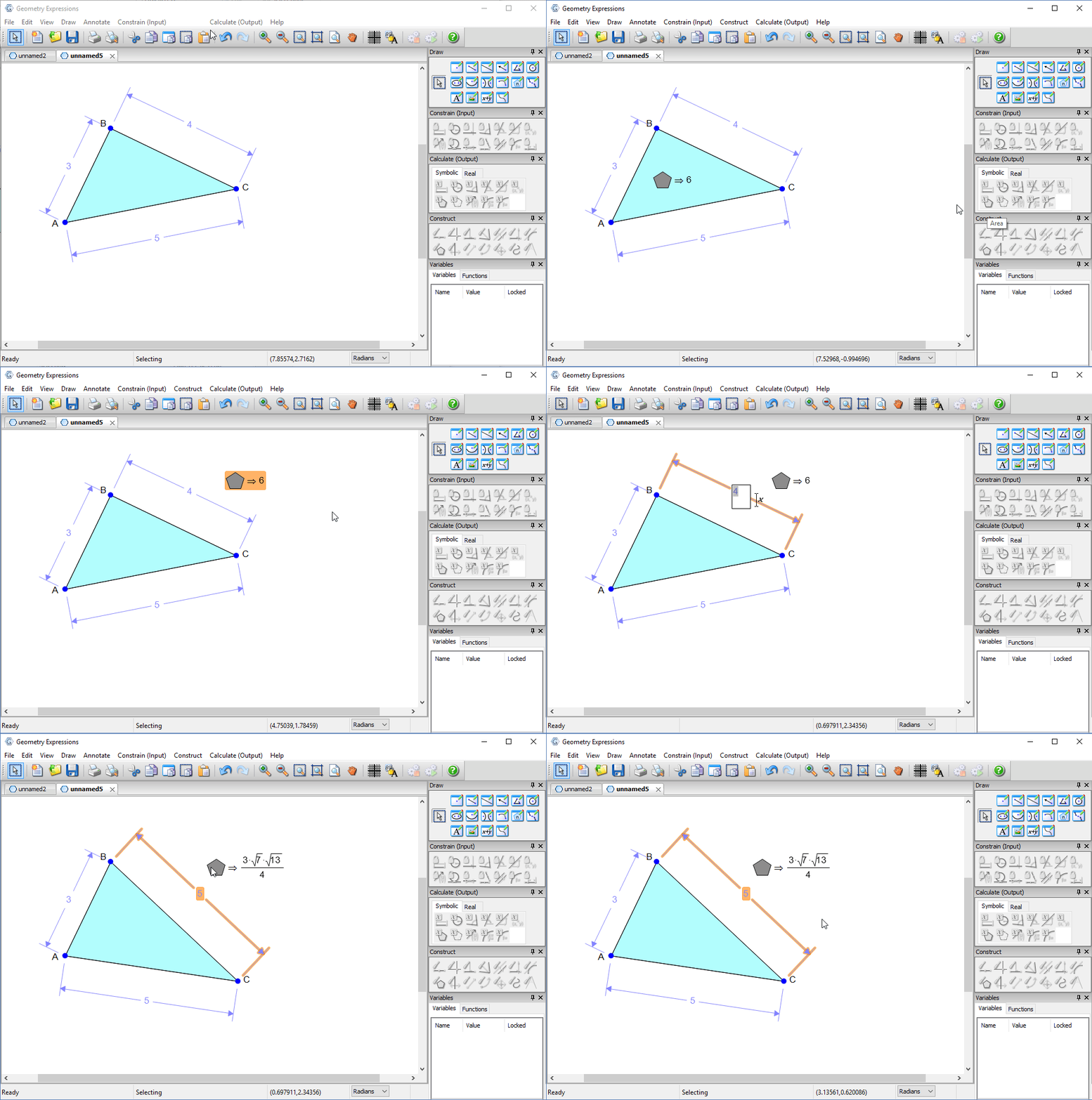
You can make the lengths symbolic, and the area will be presented as a formula.
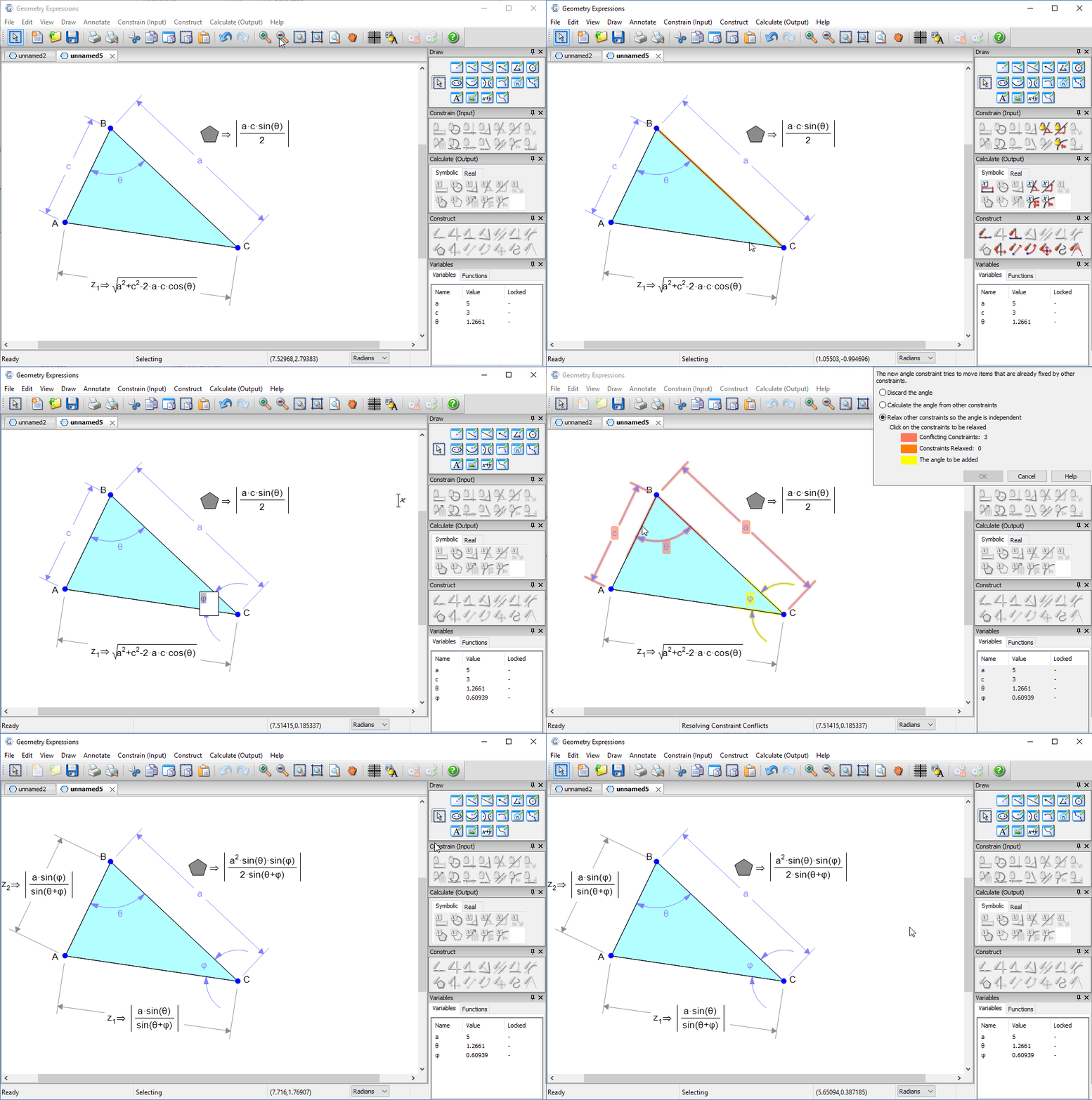
If you add an angle, the system will tell you that this will be overconstrained. However, you can choose to relax one of the previous constraints and convert it to a measurement.
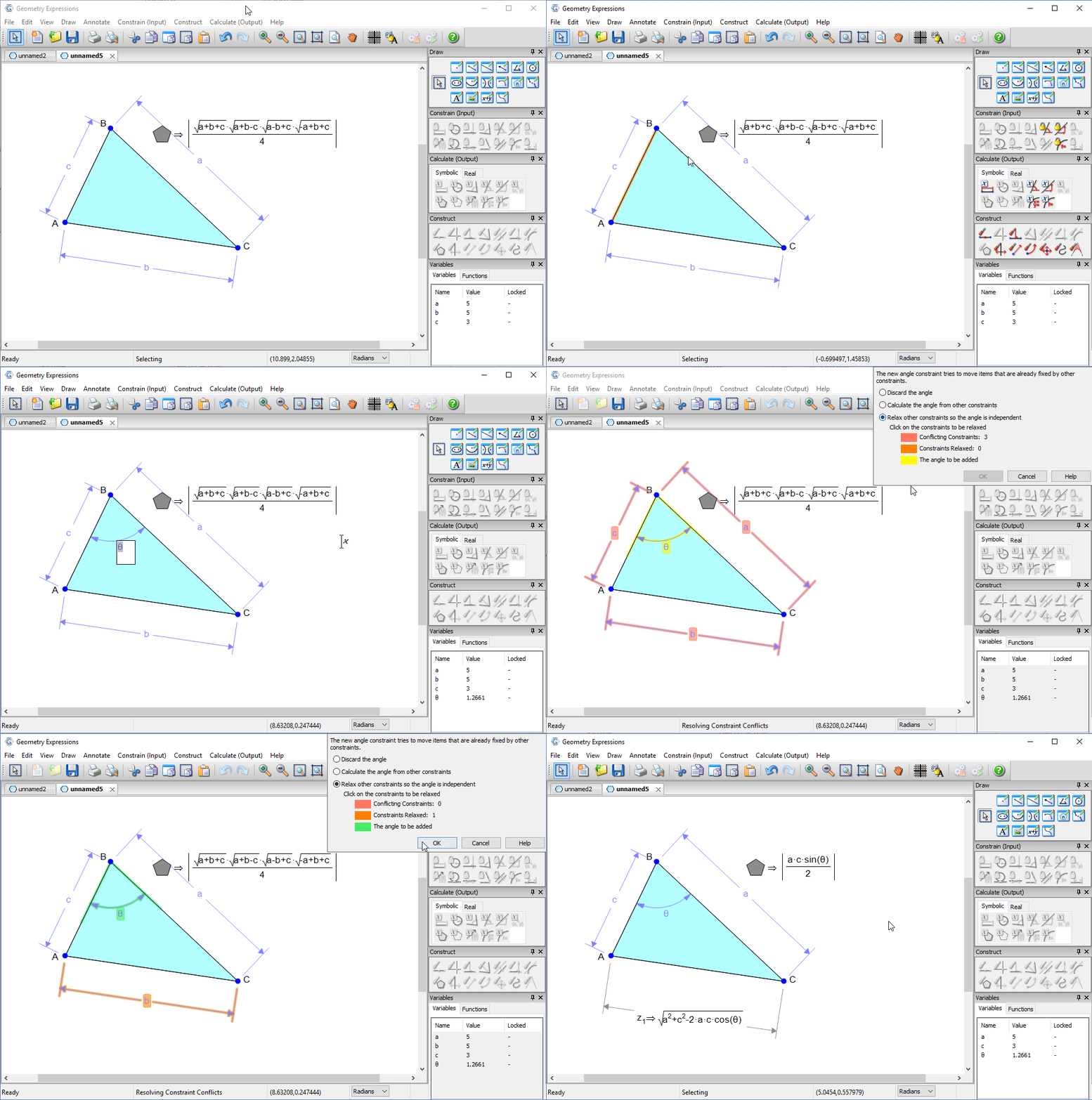
We repeat the process, adding a second angle.